Caring for our elm trees
Elm leaf beetle
The Hobsons Bay elm tree population has significant environmental, historical and amenity value. Most of our elm trees are protected by planning and heritage overlays. Council has over 900 elm trees that range from newly planted to mature.
Treatment of Elm Leaf Beetle (ELB, Xanthogaleruca luteola) occurs annually and is broken down into a two-year cycle. Most of the treatments occur the Newport, Seabrook, South Kingsville and Williamstown areas. Trees are micro-injected with a pesticide that was invented, developed, and formulated entirely within Australia. This treatment provides an environmentally safe alternative to other common treatment methods and presents a low risk to pollinating insects, such as bees.
If left untreated, the elm leaf beetle can defoliate an elm tree in a matter of weeks, and currently poses the greatest threat to the health and wellbeing of Australia’s elm tree population.
What does an elm leaf beetle look like?
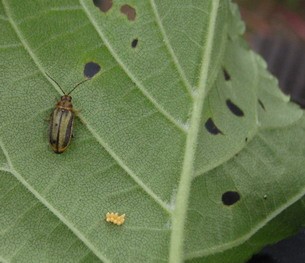
The elm leaf beetle is small, around 4mm long, dark brown/green with two lighter green stripes running down its back.
What do elm leaf beetle eggs look like?
The eggs of the beetles are laid on the underside of the leaf in late November and look like two rows of bright yellow dollops from a very small piping bag.
They hatch after about eight days and the first incarnation of larvae crawl about initiating leaf damage.
How does the elm leaf beetle affect the tree?
The most severe damage inflicted by the elm leaf beetle occurs mainly during the larval stages of the insect’s life cycle. The larvae skeletonise the leaves, destroying the tree’s ability to achieve photosynthesis and produce reserves of energy that are necessary for growth, vigour and disease resistance. Adult beetles also damage the foliage – evidenced by a ‘shot hole’ appearance in the leaves – and this damage continues right through the growing season. Early in the season damage is often noticed on one side of the tree, and this indicates the source of hibernating and emerging beetles.
How does the treatment work?
Trees are injected with a pesticide treatment in the cooler months of the year. The pesticide travels through the tree's vascular system to the leaves. Adult Elm Beetles land on the leaves to feed and lay eggs. Beetles must ingest leaf material in order to be affected by the treatment. Larve must also ingest the leaf material in order for the treatment to be effective.
Signs that the treatment is taking effect:
The aim of treatment is to break the life cycle of the Elm Leaf Beetle. The treatment does not prevent beetles from feeding on leaves.
Climate challenges
Environmental conditions can limit treatment effectiveness
Dry weather, compacted soils, or stressed root systems can reduce how effectively the pesticide can move through a trees' vascular system and into leaves. Results may be limited during periods of low rainfall or where car parking has compacted the soil around the roots of the trees.
Above: Treatment of our beautiful Golden Elm Tree at the Botanic Gardens in September 2021.